Shirley Brice Heath
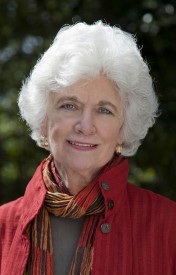
Professor Heath holds the Marjorie Bailey Professorship in English and Dramatic Literature and is also a professor of Linguistics, Emerita, at Stanford University. She also is the director of research for The Public Theater in New York City. She also has been Professor at Large, Watson Institute for International Studies and Departments of Anthropology and Education, Brown University (2003–2010).
On this site, you will find information on language development, multiple types of literacy, or the possible cognitive and linguistic benefits for adolescents of long-term engagement in art or science projects. Or you may be interested in community organizations and informal learning environments, such as studios, rehearsals, and laboratories, in which arts and sciences work together when young people take part in sustained projects.
What's New?
So much is popping right now in research on learning through the arts that it is difficult to know where to start. For too many years, we have “measured” learning achieved for young people studying or having classes in any of the arts by looking at standardized test scores. Aside from a misconstrued and dubious-at-best attribution of causation in these evaluations has been the failure to consider the actual nature of learning any of the arts. What happens in these environments, and what difference does the quality, extent, and atmosphere of such environments make? Each of the art fields — dance, music, theater, visual arts, puppetry, literature, etc., — offers a different kind of learning environment, as does the level and extent of participation in each. Yet some similarities do exist. Such is particularly the case for those arts that rely on ensemble or deep collaboration among learners for performance or production.
Scholars who study learning across environments, formal and informal, have sought to find satisfactory new means of showing the kinds of achievement that come and remain with individuals when they deeply participate in the arts. A strong ally in this work has been design-based research. In this work, aspects of creating environments for deep and lasting knowledge and skill acquisition have undergone extensive study from a variety of methods. Through this work over the past decade, carried out primarily by scholars such as Philip Bell and colleagues in the learning sciences at the University of Washington, we now know better how to design projects and long-term contexts for learning in both the sciences and arts. In addition to work from the learning sciences, I have, along with several other linguistic anthropologists, undertaken the challenge of determining the extent to which learning gains in skills, attitudes, and knowledge remained and expanded. The learners studied by anthropologists have covered the life span and tended to be located in sites where learners come forward voluntarily to study, practice, and engage in pursuits of interest to them. Anthropologists prefer the term voluntary learning to informal learning, because, more often than not, the former includes formal classes as well as numerous ways of gaining skills on one’s own time, with friends or through media sources.
In the “What’s New?” entries to come, you will learn about research methods and findings from such design-based research developments as Public Works. Back in 2011, Oskar Eustis, Artistic Director of The Public Theater in New York, asked me to help him create the architecture of a program that would bring about true community theater engagement for New York City. Believing such involvement at The Public Theater should include individuals who represent all of New York City, we created the plan for Public Works. In this program, a central community-based organization in each of New York’s five boroughs joined as partner with The Public Theater to bring community residents into classes related to theater – acting, poetry and script-reading, dance, choral work, and musical theater – and to audition following months of study for a Shakespearean production. Design-based research convinced Oskar and me that to help ensure equity of inclusion, the span of community organizations would reflect individuals across the lifespan and from multiple ethnic, linguistic, experiential, and ability backgrounds.
Each year, at the Delacorte in Central Park, The Public Theater provides Shakespeare in the Park — two productions free to the public. Our plan was that added to these each year would be an additional event, the Public Works production of another work of Shakespeare. In the three-four evenings of production over Labor Day weekend each year, 100 actors, singers, and dancers from our partner community organizations across the City join with four-five Equity actors in an original musical production of one of Shakespeare’s works (though in 2015, the production was The Odyssey). Oskar wanted my research not only to document what happened in rehearsals and beyond for all involved as well as for the staff of The Public Theater. Each year, he asked also that I identify “what goes right and what goes wrong.”
For the first three years, 2013-2015, Lear deBessonet directed the production and guided classes at each of the community organizations with the help of several teaching artists and the Public Works team at The Public Theater. In 2015, Laurie Woolery joined Lear as Associate director, and Sarah Grosman and Shariffa Ali rounded out the Public Works staff. All graciously allowed me to immerse myself in the rehearsals and follow-up events, including monthly potlucks bringing all the organizational members together at The Public in lower Manhattan.
I joined with Tiana Bákic Hayden in the first two years and Siv Lie in the second two years (both anthropologists from New York University) to track specific morphemes and syntactic constructions as well as areas of content within talk among the community ensemble members before, during, and after rehearsals. We immersed ourselves in the ordinary events surrounding and within rehearsals within intruding into interactions. We asked no direct questions of any kind. Instead, we took part minimally but naturally in conversations. In one year Tiana joined the community ensemble on stage. Over four years, ensemble members have taken us as part of the entire event, and we are quite confident that our role is seen as a normal part of life in theater. Everyone knows we document as much as possible related to attendance, lateness, interactional patterns (including talk, of course), and events on stage, including the talk and actions of directors (as well as choreographers and composers).
In coming weeks, this What’s New? feature will spell out what we learned, how we worked, and the documentation available from our findings. In short, as a teaser, what we found surprised us as well as directors and staff of The Public Theater. In rank order, we found dedication to new habits, widening but tight personal networks, and reading, taking classes, and being with other people. Each year, these rates among ensemble members climbed, particularly for families and elders. All young people of an age to complete secondary school and move on to further education have done so and remained enrolled, visiting rehearsals each year to garner praise and pride from the full community ensemble.
I’m hoping this teaser will encourage you to check in on this website soon for more to come in What’s New? Stay tuned.
For more information on SBH’s current projects, see her blog.
Recent Publications
From time to time, my most recent research will be featured in this opening section. Currently, learning through sustained experience in art and/or science is of primary focus. Articles and recent lectures or conferences noted here relate to ensemble music, dramatic arts, museum life, and community-level voluntary learning of science by young people.
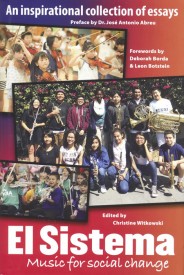
2016. The benefits of ensemble music experience (and why these benefits matter so much in underserved communities). In Christine Witkowski, Ed. Music for social change: El Sistema beyond Venezuela. New York: The Music Sales Group. Pp. 73-94.
Opportunities to take part in orchestral or choral music rarely come along for young people growing up in poverty, but the El Sistema movement begun in Venezuela changed that reality. In the past decade the El Sistema movement has spread around the globe, and the United States has taken up the challenge of increasing ways in which children in many locations can now study music. This volume describes many of these programs. Included also in this volume is my analysis of what happens in the learning processes activated when young people play musical instruments or sing in ensemble work. An historical analysis of how middle- and upper-income families of the U.S. came to value music so highly precedes close examination of the ways in which ensemble music helps youngsters develop careful reading habits, keen listening, flexible thinking, and simultaneous management of several complex tasks.